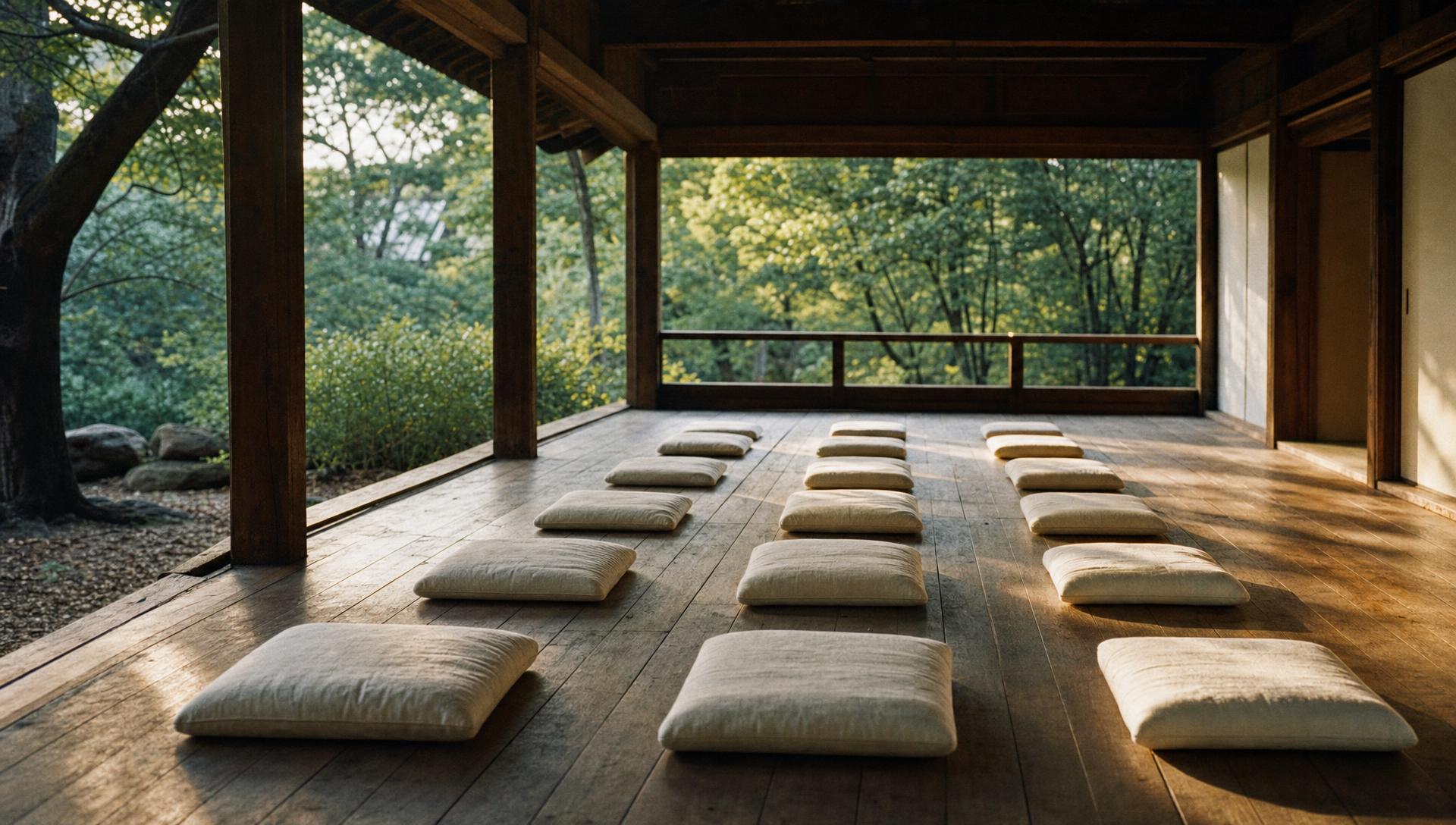
Buddhist chanting for every day, in Pali with the meaning: the bow (Arahaṁ), the homage, the three refuges, the five precepts and the Itipi so, for morning, evening and holy days
Buddhist chanting means reciting short Pali verses that recall the Buddha, his teaching and his disciples. In the Theravada tradition it is done every day, before a Buddha image or anywhere quiet. The set of daily chants below is the most basic: it opens with the bow, Arahaṁ sammāsambuddho bhagavā, followed by the homage Namo tassa, the three refuges, the five precepts, and the Itipi so verses on the qualities of the Buddha, the Dhamma and the Saṅgha. Every chant is given in Pali, spelled out for reading aloud, with its meaning, and the whole set takes about ten minutes. This page explains what each chant is, what Buddhist chanting is for, and how to chant in the morning, at night and on holy days.
What the daily Buddhist chants contain
- The bow to the Triple Gem, Arahaṁ sammāsambuddho bhagavā: one bow each for the Buddha, the Dhamma and the Saṅgha, opening the chanting with respect.
- The homage, Namo tassa bhagavato arahato sammāsambuddhassa, said three times: it pays respect to the Buddha and opens almost every chant and ceremony.
- The three refuges, Buddhaṁ saraṇaṁ gacchāmi: declaring the Buddha, the Dhamma and the Saṅgha as your refuge, three times over.
- The five precepts: renewing the five training rules of not killing, not stealing, no sexual misconduct, not lying and no intoxicants.
- The qualities of the Buddha, the Dhamma and the Saṅgha, known as the Itipi so chant: recalling the qualities of the Triple Gem one by one.
The qualities of the Triple Gem come from the Tipiṭaka, for example the Mahānāma Sutta (AN 6.10); the refuges and the precepts come from the Khuddakapāṭha. The opening bow, Arahaṁ, is a traditional chant that borrows its words from those qualities, author unknown. So the whole set is Buddhist chanting with meaning that you can use every day, alone or with your family.
What Buddhist chanting is for
Buddhist chanting is not asking anyone for favours. It is recollection (anussati): calling to mind the qualities of the Buddha, the Dhamma and the Saṅgha until the mind rests in what is good. The Buddha told Mahānāma, a Sakyan, what such recollection does:
Yasmiṁ, mahānāma, samaye ariyasāvako tathāgataṁ anussarati,
nevassa tasmiṁ samaye rāgapariyuṭṭhitaṁ cittaṁ hoti,
na dosapariyuṭṭhitaṁ cittaṁ hoti,
na mohapariyuṭṭhitaṁ cittaṁ hoti;
ujugatamevassa tasmiṁ samaye cittaṁ hoti tathāgataṁ ārabbha.Mahānāma, at a time when a noble disciple recollects the Realised One, their mind is not overcome by greed, not overcome by hate, not overcome by delusion. At that time their mind is straight, resting on the Realised One.
AN 6.10
The same sutta goes on: a mind made straight like this finds joy; with joy comes rapture, the body grows calm, one feels happiness, and the mind settles in samādhi. This is why chanting is a good preparation before sitting meditation. Chanting is also how the teaching was handed down: before it was written down, the Tipiṭaka was kept for centuries by recitation, and when we chant we take part in that tradition. Buddhist chanting does not promise luck or wealth; the fruit the sutta speaks of is a calmer, straighter mind.
Morning chanting and evening chanting
You can chant at any time, but the usual times are in the morning after waking and in the evening before sleep. In the morning, chanting sets your intention for the day, and renewing the precepts each morning is a reminder before you go out to meet people. In the evening, chanting helps you put the day down, and you can follow it by spreading loving-kindness to yourself and others before sleep. Daily Buddhist chanting can follow the same order at both times:
- Bow three times, then chant the bow, Arahaṁ.
- Chant the homage, Namo tassa, three times.
- Chant the three refuges and the five training rules.
- Chant the qualities of the Buddha, the Dhamma and the Saṅgha.
- Sit quietly, or meditate briefly for five to ten minutes.
- Spread loving-kindness and, if you wish, share the merit with the dedication of merit.
- Bow three times before you get up.
If you are short of time, such as on a rushed morning, just the homage three times, the refuges and the five training rules will do. A short chant every day is better than a long one once in a while.
How to chant at home
You don't need a shrine room or an altar table. A quiet corner with a Buddha image or picture is enough, and you can chant with neither. Some people light a candle and incense and set out flowers as offerings to the Buddha, the Dhamma and the Saṅgha; all of this is optional.
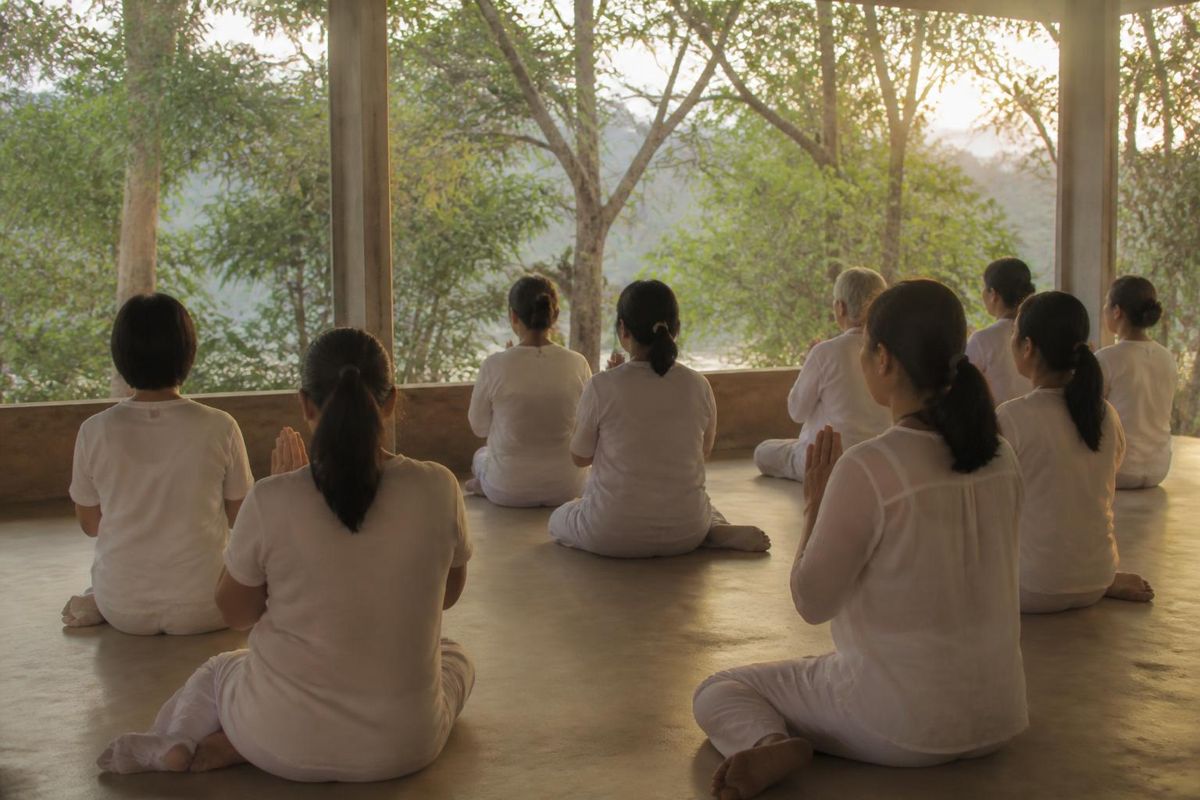
Kneel, or sit with your legs folded to one side, palms joined at the chest. Bow with five points touching the floor: forehead, both hands and both knees. Chant clearly enough to hear yourself, neither loud nor fast. Each Pali line below is spelled out for reading aloud, so you can simply read it as written. The final 'ng' sound on words like buddhaṁ comes from the Pali nasal ṁ, and a double consonant, as in sammā, is held so that both are heard. If you chant with your family, one person can lead the opening of each chant and everyone joins in together.
Buddhist chanting on holy days
Holy days (wan phra), the uposatha days, fall on the 8th and 15th days of the waxing moon and the 8th and 15th of the waning moon (the 14th in a short month) in the lunar calendar, so there are about four in a month. Those on the 15th or 14th, the full and new moon, are often called major holy days (wan phra yai), and those on the 8th minor ones. On these days many people go to a temple, give alms, take the precepts, listen to the Dhamma and chant for longer than usual.
If you chant at home on a holy day, the daily set is still the core, and you can add more as time allows: take the eight precepts from the morning until dawn the next day, chant the protective chants, or meditate for longer. So holy-day Buddhist chanting is not a separate set; it is the daily set chanted with more care on a day given to keeping precepts and meditating. On major days such as Vesak, the Itipi so in this set is also what people chant while walking with candles around the temple hall or stupa.
Chanting with the meaning in mind
Every chant in this set comes with its meaning, because chanting is worth most when you know what you are saying. Read the meaning of a chant before you recite it, then keep that meaning in mind as you chant. The first line, Arahaṁ sammāsambuddho bhagavā, means 'The Blessed One is perfected and fully awakened by himself', and buddhaṁ bhagavantaṁ abhivādemi means 'I bow to the Buddha, the Blessed One'. If you don't know the chants by heart yet, read them from this page and learn one at a time; one a week is enough, and before long you will chant the whole set without looking.
Adding more Buddhist chanting
Once the daily set comes easily, you can add other chants as you like. Popular ones are the Jinapañjara verses, the Bāhuṁ verses, the Karaniya Metta Sutta and the other protective chants, which also have their meanings on this site. Whatever Buddhist chanting you take up, chant with understanding, and remember that a chant reminds us to do good; it does not replace doing good.
The chant
Bowing to the Triple Gem
Arahaṁ sammāsambuddho bhagavā,
buddhaṁ bhagavantaṁ abhivādemi.
Svākkhāto bhagavatā dhammo,
dhammaṁ namassāmi.
Supaṭipanno bhagavato sāvakasaṅgho,
saṅghaṁ namāmi.
Meaning
The Blessed One is perfected and fully awakened; I bow to the Buddha. The Teaching is well explained by the Blessed One; I pay homage to the Teaching. The Blessed One's disciples practise well; I pay homage to the Saṅgha. (Bow once after each part.)
Homage to the Buddha
Namo tassa bhagavato arahato sammāsambuddhassa.
Say 3 timesMeaning
Homage to him, the blessed one, the perfected one, the fully awakened Buddha!
The Three Refuges
Buddhaṁ saraṇaṁ gacchāmi,
Dhammaṁ saraṇaṁ gacchāmi,
Saṅghaṁ saraṇaṁ gacchāmi.
Dutiyampi buddhaṁ saraṇaṁ gacchāmi,
Dutiyampi dhammaṁ saraṇaṁ gacchāmi,
Dutiyampi saṅghaṁ saraṇaṁ gacchāmi.
Tatiyampi buddhaṁ saraṇaṁ gacchāmi,
Tatiyampi dhammaṁ saraṇaṁ gacchāmi,
Tatiyampi saṅghaṁ saraṇaṁ gacchāmi.
Meaning
I take refuge in the Buddha, the Teaching and the Saṅgha. It is said a second and a third time.
The Five Precepts
Pāṇātipātā veramaṇī sikkhāpadaṁ samādiyāmi.
Adinnādānā veramaṇī sikkhāpadaṁ samādiyāmi.
Kāmesumicchācārā veramaṇī sikkhāpadaṁ samādiyāmi.
Musāvādā veramaṇī sikkhāpadaṁ samādiyāmi.
Surāmerayamajjapamādaṭṭhānā veramaṇī sikkhāpadaṁ samādiyāmi.
Meaning
I undertake the training to refrain from killing, stealing, sexual misconduct, lying, and intoxicants that cause carelessness.
Qualities of the Buddha
Itipi so bhagavā arahaṁ sammāsambuddho,
vijjācaraṇasampanno sugato lokavidū,
anuttaro purisadammasārathi,
satthā devamanussānaṁ buddho bhagavāti.
Meaning
That Blessed One is perfected, a fully awakened Buddha, accomplished in knowledge and conduct, holy, knower of the world, supreme guide for those who wish to train, teacher of gods and humans, awakened, blessed.
Qualities of the Teaching
Svākkhāto bhagavatā dhammo,
sandiṭṭhiko akāliko ehipassiko,
opaneyyiko paccattaṁ veditabbo viññūhīti.
Meaning
The Teaching is well explained by the Blessed One: visible in this life, immediately effective, inviting inspection, relevant, to be known by the wise for themselves.
Qualities of the Saṅgha
Suppaṭipanno bhagavato sāvakasaṅgho,
ujuppaṭipanno bhagavato sāvakasaṅgho,
ñāyappaṭipanno bhagavato sāvakasaṅgho,
sāmīcippaṭipanno bhagavato sāvakasaṅgho,
yadidaṁ cattāri purisayugāni aṭṭha purisapuggalā,
esa bhagavato sāvakasaṅgho,
āhuneyyo pāhuneyyo dakkhiṇeyyo añjalikaraṇīyo,
anuttaraṁ puññakkhettaṁ lokassāti.
Meaning
The Saṅgha of the Buddha's disciples practises well, directly, methodically and properly. It is the four pairs, the eight individuals. This Saṅgha is worthy of offerings, of hospitality, of gifts and of respect, and is the supreme field of merit for the world.
Machine translation from: The Three Refuges (KP 1) · The Ten Precepts (KP 2) · Mahānāma Sutta (AN 6.10) · The bow to the Triple Gem is a traditional verse, author unknown
Read next
The Itipiso Chant with Translation: the Qualities of the Buddha, Dhamma and Saṅgha
The Itipiso chant in Pali with reading and translation: the Buddha's 9 qualities, the Dhamma's 6 and the Saṅgha's 9, its source in the suttas, and chanting it 3, 9 or 108 times

The Five Precepts: What They Are and How to Take Them
The five precepts are the five training rules of Buddhists: no killing, stealing, sexual misconduct, lying or intoxicants. Here with the request, the words of undertaking and the Pali with meaning, line by line

The Loving-Kindness Chant for Yourself, Others and All Beings, with Meaning
The loving-kindness chant in Pali with its meaning: for yourself, for others and for all beings (sabbe sattā), followed by compassion, gladness and equanimity, and how to spread loving-kindness to those you may have wronged