Meditation posture: how to sit for meditation
Meditation posture made simple: four ways to sit, how to place the back, hands, eyes and chin, what to do about pain, and your first session.
A good meditation posture is simply one you can hold, upright and at ease, for the length of a sitting. It does not need to look impressive, and it does not have to be the full lotus. This page explains how to sit for meditation in four common ways (cross-legged, half-lotus, kneeling and on a chair), how to place the back, hands, eyes and chin, how high a cushion should be, what to do about pain and numbness, how long to sit, and how to run your first session step by step. The same meditation posture serves calm and insight practice alike, so it is a good place to start whichever method you follow.
Why meditation posture matters
The Buddha's instruction for sitting is short. In the Satipaṭṭhāna Sutta and the Ānāpānassati Sutta a meditator sits down, folds the legs crosswise, sets the body straight and establishes mindfulness in front. Those three phrases hold the whole point of meditation posture: a stable base, an upright body and an alert mind.
Idha, bhikkhave, bhikkhu araññagato vā rukkhamūlagato vā suññāgāragato vā nisīdati,
pallaṅkaṁ ābhujitvā, ujuṁ kāyaṁ paṇidhāya, parimukhaṁ satiṁ upaṭṭhapetvā.Here, mendicants, a mendicant who has gone to a forest, to the root of a tree or to an empty hut sits down, folds the legs crosswise, sets the body straight and establishes mindfulness in front.
MN 10
An upright body keeps the mind awake. When the spine slumps, drowsiness comes quickly; when the body is held stiffly, tension and restlessness follow. A stable base lets you stop thinking about the body and give your attention to the practice. Posture is a support, not a test: what matters is that you can sit still, upright and relaxed, and know what is happening. 'Establishing mindfulness in front' is usually understood as making mindfulness present and foremost, not as an instruction to stare at anything.
Choosing a meditation posture: four ways to sit
There is no single correct way to sit. Pick the meditation posture your body allows today, and change it if it stops working. The four most common are:
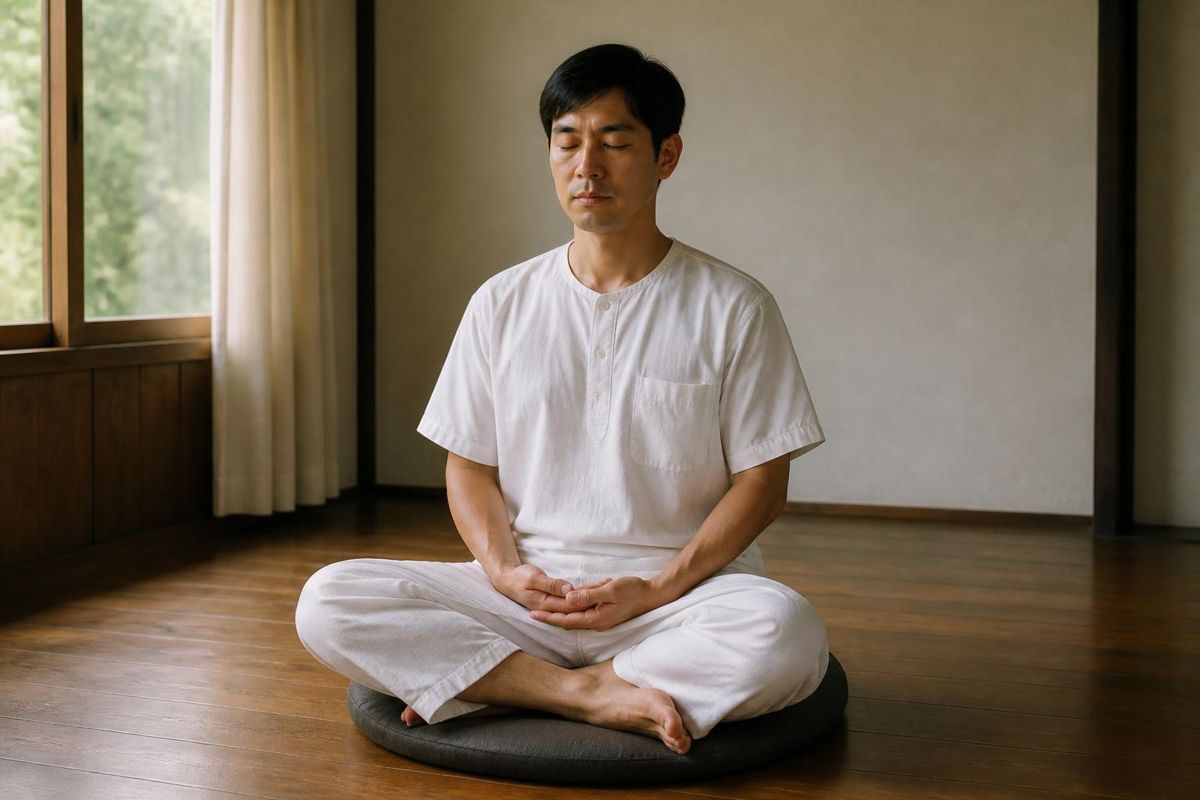
- Cross-legged (the easy or Burmese position): both shins rest on the floor, one in front of the other, with neither foot on the opposite thigh. For most beginners this is the most comfortable way to sit on the floor.
- Half-lotus: one foot rests on the opposite thigh and the other leg folds underneath. In Thailand the usual instruction is to place the right leg over the left, matching the right hand over the left. The full lotus, with both feet on the opposite thighs, is very stable but needs open hips; never force a knee into it.
- Kneeling: sit back on a firm cushion placed between or under the heels, or on a low meditation bench, with the knees on a mat. It keeps the back straight easily and suits people whose hips do not open.
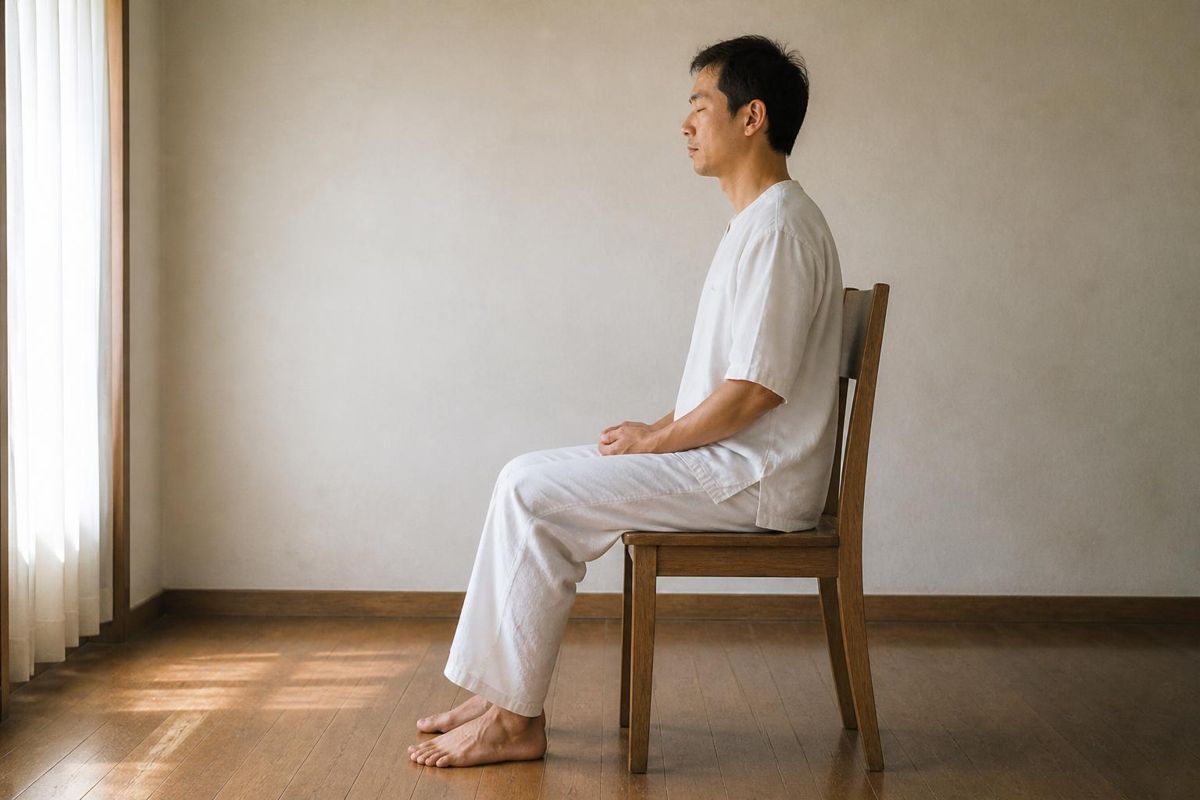
- On a chair: sit near the front edge of a firm, upright chair, feet flat on the floor about hip-width apart, and do not lean on the backrest unless you need to. A chair is a full meditation posture, not a second-best one.
The Buddha's instruction mentions sitting cross-legged because that was how people sat in his time. The purpose is a still, upright body, and any of these four gives you that. If you have knee, hip or back problems, start on a chair or kneeling, and ask a doctor or physiotherapist if you are unsure.
Back, hands, eyes and chin
- Back: let the spine rise naturally, as if the crown of the head were lifted gently upward. Keep the natural curve of the lower back; do not flatten it or arch it hard. Rock slowly side to side and front to back a few times, then come to rest at the centre.
- Shoulders and arms: let the shoulders drop and the arms hang loosely, with the elbows slightly away from the body.
- Hands: rest them in the lap, palms up, the right hand on top of the left. The thumbs may touch lightly or simply rest. Some people prefer the hands on the knees; either is fine as long as the shoulders stay relaxed.
- Eyes: close them gently, or keep them half-open with the gaze resting on the floor a metre or so ahead. Half-open eyes help when you are sleepy.
- Chin and face: tuck the chin in very slightly so the back of the neck is long. Relax the jaw, let the tongue rest, and soften the forehead and the muscles around the eyes.
Once you have set the meditation posture, run your attention down from the head to the seat once, releasing any tension you find, and then leave the body alone. Constant adjusting is one of the commonest ways the mind avoids the practice.
Cushion height and support
On the floor, height matters more than anything else. Sit on the front third of a firm cushion so that the hips are a little higher than the knees. This tilts the pelvis forward and lets the spine stay upright without effort. If the knees float in the air, the cushion is too low or the hips need time: put a folded blanket or a small cushion under each knee so the base becomes three firm points, the seat and both knees. A typical meditation cushion is around ten to fifteen centimetres high, but the right height is whatever lets your back stay upright without strain. Sit on a mat or folded blanket rather than a hard floor to spare the ankles. On a chair, if your feet do not reach the floor, put a cushion or a book under them.
Pain and numbness in sitting meditation
Some discomfort is normal in the first weeks of sitting meditation. Muscles that are not used to holding you upright ache, and knees and ankles complain. Two kinds of discomfort need to be told apart.
- Dull aches in the muscles, which come and go and change as you watch them. These can be part of the practice: know them directly, where they are and how they change. In vipassana, pain is one more thing to be known.
- Sharp, burning or twisting pain in a joint, especially the knee. This is a signal to change position, not something to endure. Move slowly and mindfully, knowing the wish to move before you move.
Numbness and pins and needles in the legs or feet come from pressure and usually fade within a minute or two of moving. If a leg has gone numb, do not jump up at the end of a sitting: straighten the leg, wait until feeling returns, and then stand slowly so that you do not fall. Changing posture during a sitting is allowed. The aim is to know body and mind, and sitting through serious pain for its own sake is no part of that.
How long to sit
Begin with ten to fifteen minutes once or twice a day. Use a timer, so you are not checking the clock. When ten minutes feel easy, add five, and keep adding slowly. Many people settle at twenty to forty-five minutes. Sitting every day for a short time does more than one long sitting a week. If your legs cannot yet manage the time you want, split it: walk for a while, then sit, as described under walking meditation.
How to meditate: your first session, step by step
- Choose a quiet time and place, silence your phone and set a timer for ten or fifteen minutes.
- Sit down in the meditation posture you have chosen, on a cushion, a bench or a chair.
- Settle the base: let the weight sink into the seat and, on the floor, let both knees rest down or on supports.
- Straighten the back, rock gently to find the centre, let the shoulders drop and tuck the chin slightly.
- Place the hands in the lap, right over left, and close the eyes or lower the gaze.
- Sweep attention once from the head down to the seat, letting go of tension in the face, shoulders and belly.
- Bring attention to one simple object: the breath at the nostrils, or the rising and falling of the abdomen. Breathe naturally, without control.
- When the mind wanders, notice where it went and come back gently. This is not failure; it is the exercise itself.
- When the timer sounds, open the eyes slowly, move the legs carefully, and notice how body and mind feel before you get up.
That is how to meditate in its simplest form. To go further with the breath, read mindfulness of breathing; to note the abdomen in the vipassana way, see noting meditation.
Common mistakes
- Slumping: the chest sinks, the head drops and drowsiness follows. Lift through the crown of the head again.
- Rigidity: holding the back like a rod, with the shoulders raised. Upright means balanced, not tense.
- A cushion that is too low, so the knees sit higher than the hips and the back rounds.
- Forcing the lotus: pushing a knee into a position the hip cannot yet allow. Knees are easily injured.
- Fidgeting: adjusting every minute. Decide on a meditation posture, then move only when there is a real reason, and move mindfully.
- Chasing the perfect position: no posture removes all discomfort. Sit well enough and get on with the practice.
From the cushion into the practice
Meditation posture is the start of practice, not its goal. Once you can sit steadily, the real work is attention: knowing the breath, the body, feelings and the mind as they are. Sleepiness, restlessness and doubt will come; the page on the five hindrances explains what helps. For a full routine that combines walking and sitting at home, follow how to do vipassana, and for a wider view of the methods taught in the Buddhist tradition, see Buddhist meditation. If you have a history of serious mental illness, talk to a doctor and an experienced teacher before starting intensive practice.
Based on: Satipaṭṭhāna Sutta (MN 10) · Ānāpānassati Sutta (MN 118)
Read next
Walking meditation: how to do it, step by step
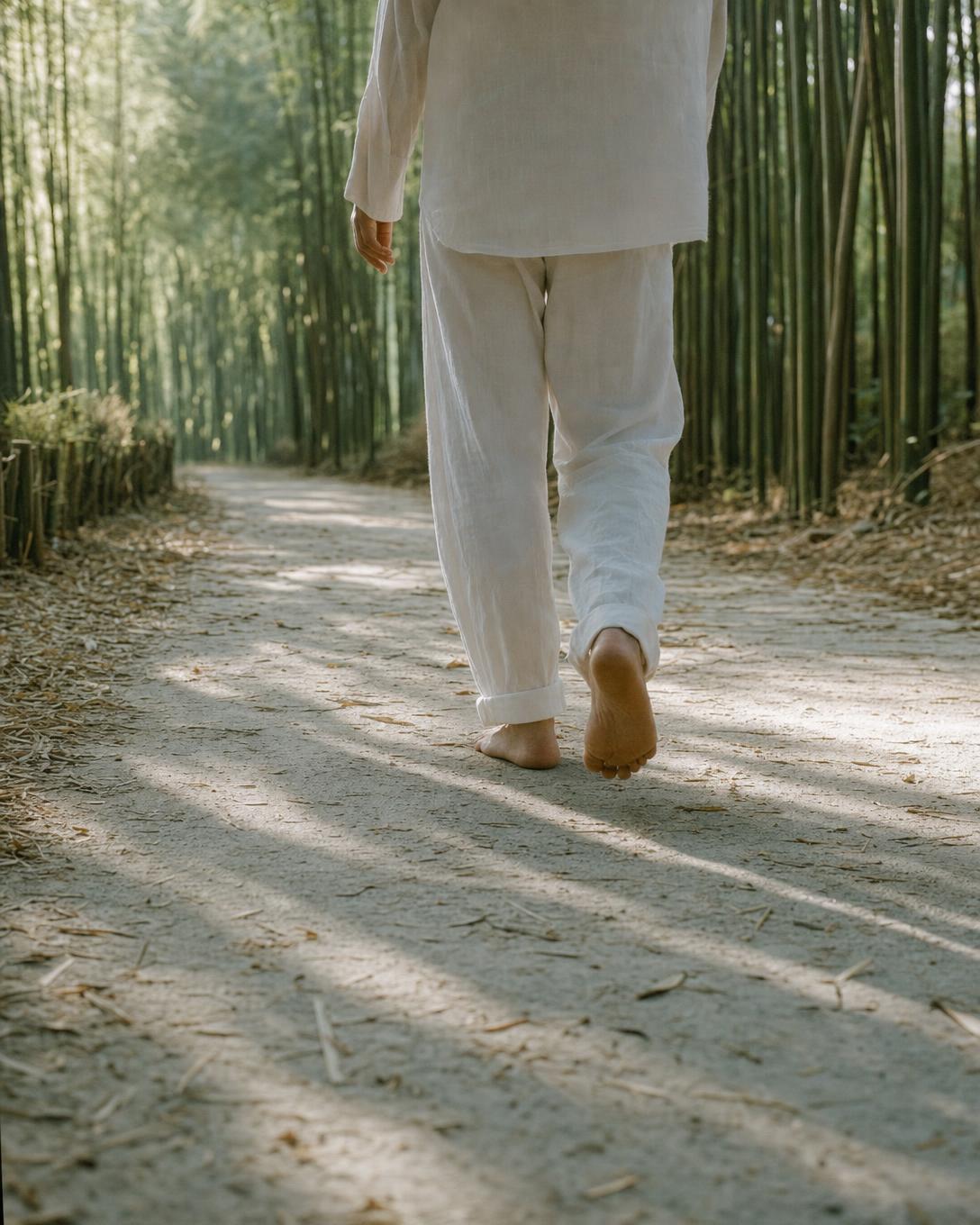
Walking meditation step by step: the path, pace, eyes and hands, noting each step in one to six parts, turning, and the five benefits the Buddha named.

Mindfulness of breathing (anapanasati): a practical guide
Mindfulness of breathing step by step: where to feel the breath, counting, long and short breaths, the 16 steps in brief, calm and insight, and common problems.
How to do vipassana at home: a step-by-step guide
How to do vipassana at home, step by step: preparing, walking, sitting and noting, and a simple plan for your first week.