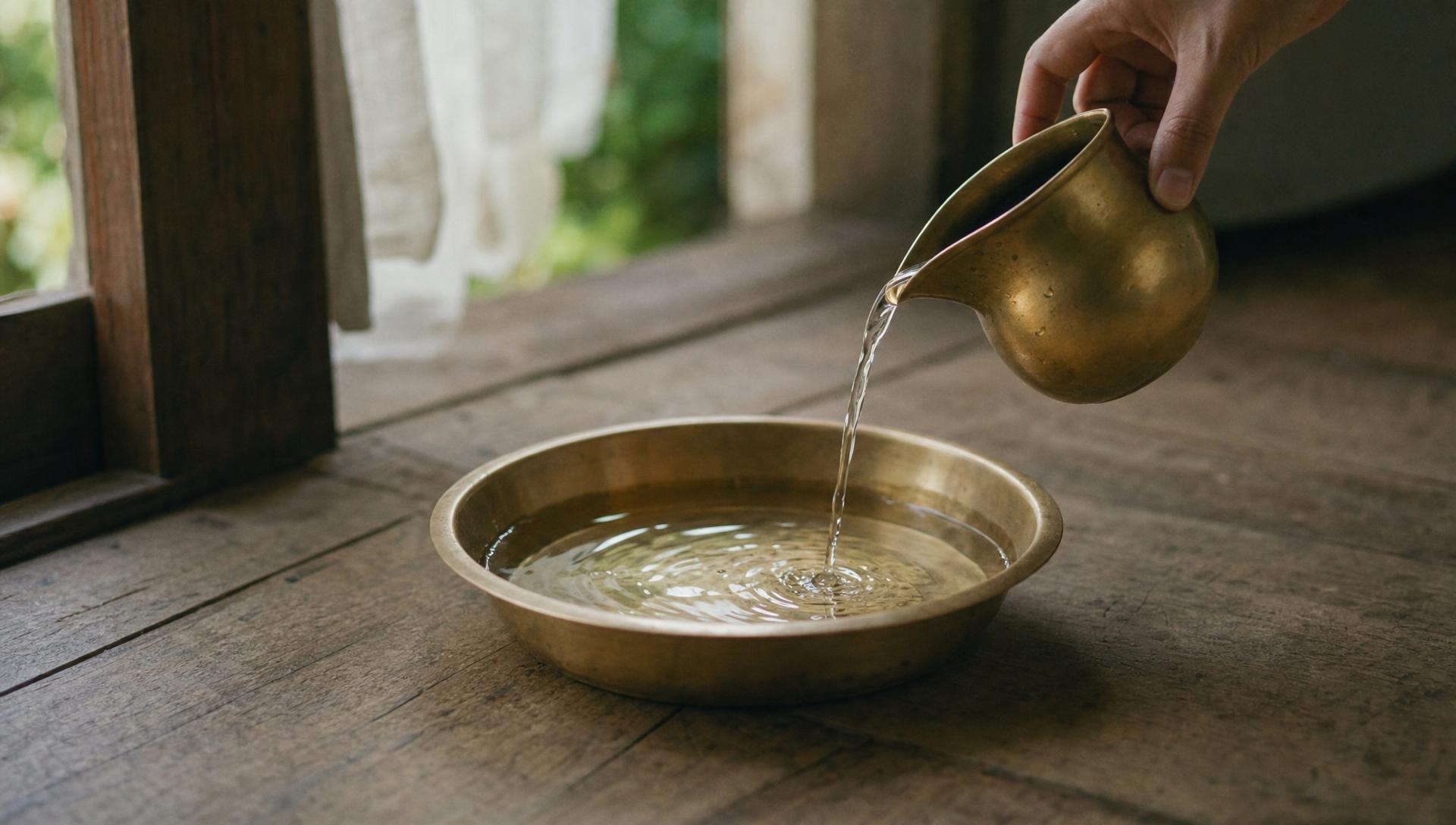
The kruat nam chant, short and full, in Pali with reading and translation, how to pour the water after giving alms or while monks chant, and dedicating merit to the departed
Kruat nam is the dedication of merit said after a good deed, such as giving alms, offering requisites to the Saṅgha or listening to monks chant, while clean water is poured slowly in a thin stream. Kruat here means to pour, and the unbroken stream of water is a sign of the merit passing on to those who receive it. Below is the complete chant in Pali with its reading and translation: the short form Idaṁ me ñātīnaṁ hotu, the lines from the Tirokuṭṭa Sutta, the full form Iminā puññakammena, and the verse recalling the refuges. This section explains what dedicating merit means, its source in the suttas, which part to use when, how to pour the water step by step, and dedicating merit to the departed.
What is kruat nam, and why water?
The dedication of merit happens in the mind; the water is a sign that helps make the intention clear. The image comes from the Tirokuṭṭa Sutta (Khuddakapāṭha 7): just as rain falling on high ground flows down to the low land, so what is given here reaches and helps the departed. That verse is in the chant below, and it is the source of the lines Yathā vārivahā pūrā that monks chant while people pour the water.
Because merit is in the mind, if there is no water you can dedicate it by joining your palms and saying the words with intention, which people call 'dry kruat nam'. What matters is the giver's intention, not the amount of water or the vessel.
The Tirokuṭṭa Sutta also gives the reason for dedicating merit, gently: remembering what the departed once did for us. And it says that tears do not help those who have gone:
Adāsi me akāsi me,
ñāti mittā sakhā ca me;
Petānaṁ dakkhiṇaṁ dajjā,
pubbe katamanussaraṁ.
Na hi ruṇṇaṁ vā soko vā,
yā caññā paridevanā;
Na taṁ petānamatthāya,
evaṁ tiṭṭhanti ñātayo.Remembering what they once did, 'they gave to me, they did this for me, they were my relative, my friend, my companion', one should give an offering for the departed. For weeping, sorrow and every other lament are of no use to the departed while their relatives remain like this.
KP 7
Dedicating merit in the teaching
Giving a share of merit is itself a kind of merit. The Navakovada counts it among the ten bases of merit, the ten ways of making merit. The two items that concern kruat nam directly read, in the Navakovada's words (our translation):
- Pattidānamaya: merit made by giving a share of merit.
- Pattānumodanāmaya: merit made by rejoicing in a share of merit.
The first is sharing your own merit with others; the second is rejoicing in merit that others have made or shared. So both the giver and the one who rejoices are making merit. Sharing merit does not reduce the giver's merit, since the sharing is itself one more good act. The full list of ten is on the bases of merit page.
The Navakovada's section on practice for householders speaks of the uses of wealth rightly earned. One of them is making the five offerings (bali), and two of those five match kruat nam. In the Navakovada's words (our translation):
- Pubbapetabali: making merit dedicated to the dead.
- Devatābali: making merit dedicated to the devas.
This answers a question many people ask: to whom can merit be dedicated? To departed relatives, to devas and to all beings, which matches the Iminā puññakammena verse below. It names teachers, parents, relatives, devas, friends, people in general, those neutral to us and even enemies, and ends 'may all beings be happy'.
The short form, Iminā and the full form
The chant below has several parts, each used on different occasions:
- The short form: Idaṁ me ñātīnaṁ hotu, sukhitā hontu ñātayo, 'may this be for my relatives, may my relatives be happy', said three times. It suits the moment after giving alms or when time is short. The line comes from the Tirokuṭṭa Sutta.
- From the Tirokuṭṭa Sutta: the verses about water flowing from high ground to low and about a gift well placed in the Saṅgha, which explain what the pouring means.
- Iminā puññakammena: the full form, dedicating merit to benefactors, relatives, devas and all beings; the part most often used when chanting at home or at a temple.
- The giver's own aspiration: Iminā puññakammena, iminā uddisena ca is a wish for oneself, to cut off craving and clinging and to have an upright mind, mindfulness, wisdom and energy until nibbāna. This is the dedication for oneself, in the sense of an aspiration for one's own practice, not a request for things.
- Recalling the refuges: Buddhādhipavaro nātho closes by recalling the Buddha, the Dhamma, the Paccekabuddhas and the Saṅgha as refuge.
When you have time, chant the full form from Iminā puññakammena to the refuges; when time is short, say the short form three times. Both are equally correct.
How to pour the water, step by step, and pouring it on the ground
- Prepare clean water in a small vessel you can pour from, such as a small jug or a glass, and something to pour it into; outdoors you can pour straight onto the ground.
- When the monks begin Yathā vārivahā pūrā, start pouring slowly in a thin, unbroken stream, and say the dedication silently, either the short form or Iminā.
- While pouring, think of the person you are dedicating to; you may add their name in your own language after the Pali.
- When the monks reach Sabbītiyo, pour out the rest of the water and join your palms to receive the blessing.
- After the ceremony, pour the water onto clean ground, such as the foot of a tree or a garden, not down a drain or into a dirty place.

If you dedicate merit at home without monks, chant the dedication yourself as you pour, then take the water out to the ground in the same way. Pouring it at the foot of a tree is a common way to do it; the suttas set no rule about where the water must go. What matters is doing it with respect.
Kruat nam after giving alms
After giving alms in the morning, some monks give a short blessing. Meanwhile the giver usually sits or kneels with palms joined and says the short form, Idaṁ me ñātīnaṁ hotu, sukhitā hontu ñātayo, three times, pouring water at the same time if some is ready, or dedicating 'dry' in the mind if not. At home you can chant Iminā puññakammena again.
Dedicating merit to the departed, and to those we have wronged
The whole Tirokuṭṭa Sutta is about departed relatives, so the line Idaṁ me ñātīnaṁ hotu is in itself a dedication to the departed. After the Pali you may also say it in your own words, for example: 'May the merit I have made today reach (name); may they receive it and be happy.' Naming the person helps make the intention clear. At merit-making for the departed, offering to the Saṅgha and the paṁsukūla chant often go with it, which matches the sutta's words that a gift well placed in the Saṅgha helps the departed for a long time.
Chao kam nai wen means people we may have harmed or with whom we have a quarrel. The Iminā puññakammena verse already includes them in majjhattā verikāpi ca, 'those neutral to me and even enemies'. If you want something short, add your own words, for example: 'May this merit reach those I have wronged; may they be happy and forgive me.' The resolve not to harm anyone again, and keeping the five precepts, is the amends that fits the teaching best.
Dedicating merit and spreading loving-kindness: the difference
The two are often done one after the other, but they are not the same. Dedicating merit is sharing merit you have already made, so it follows some good deed. Spreading loving-kindness is sending goodwill so that you and all beings may be happy, and can be done at any time, with no earlier merit needed. Many people chant before sleep, spread loving-kindness, and then dedicate the merit of that chanting. The order works well: the chanting and the loving-kindness are good deeds already done, so there is something to share.
The chant
The short dedication
Idaṁ me ñātīnaṁ hotu,
sukhitā hontu ñātayo.
Meaning
May this be for my relatives. May my relatives be happy. The line comes from the Tirokuṭṭa Sutta, which says vo ('your') where this short form says me ('my').
From the Tirokuṭṭa Sutta
Unname udakaṁ vuṭṭhaṁ, yathā ninnaṁ pavattati,
evameva ito dinnaṁ, petānaṁ upakappati.
Yathā vārivahā pūrā, paripūrenti sāgaraṁ,
evameva ito dinnaṁ, petānaṁ upakappati.
Meaning
Just as rain that falls on high ground flows down to the low land, so what is given here reaches and helps the departed. Just as full rivers fill the ocean, so what is given here reaches and helps the departed.
A gift well placed in the Saṅgha
Ayañca kho dakkhiṇā dinnā,
saṅghamhi suppatiṭṭhitā,
dīgharattaṁ hitāyassa,
ṭhānaso upakappati.
Meaning
This offering, now given and well placed in the Saṅgha, is for their welfare for a long time and helps them at once.
Sharing merit with benefactors and all beings
Iminā puññakammena, upajjhāyā guṇuttarā,
ācariyūpakārā ca, mātāpitā ca ñātakā,
suriyo candimā rājā, guṇavantā narāpi ca,
brahmamārā ca indā ca, lokapālā ca devatā,
yamo mittā manussā ca, majjhattā verikāpi ca,
sabbe sattā sukhī hontu, puññāni pakatāni me,
sukhañca tividhaṁ dentu, khippaṁ pāpetha vo mataṁ.
Meaning
By this act of merit, may my preceptors of high virtue, the teachers who helped me, my mother, father and relatives, the sun and the moon, rulers, good people, Brahmās, Māras and Indras, the world guardians and the gods, Yama, friends, people everywhere, those neutral to me and even enemies: may all beings be happy. May the merit I have made give you threefold happiness, and may you swiftly reach the deathless.
The giver's own aspiration
Iminā puññakammena, iminā uddisena ca,
khippāhaṁ sulabhe ceva, taṇhupādānachedanaṁ,
ye santāne hīnā dhammā, yāva nibbānato mamaṁ,
nassantu sabbadā yeva, yattha jāto bhave bhave,
ujucittaṁ satipaññā, sallekho viriyamhinā,
mārā labhantu nokāsaṁ, kātuñca viriyesu me.
Meaning
By this act of merit and this dedication, may I soon cut off craving and clinging. Whatever low states are in my mind, until I reach nibbāna, may they always perish, in whatever life I am born. May I have an upright mind, mindfulness and wisdom, the wearing away of defilements, and energy. May the Māras find no chance to hinder my efforts.
Recalling the refuges
Buddhādhipavaro nātho, dhammo nātho varuttamo,
nātho paccekabuddho ca, saṅgho nāthottaro mamaṁ,
tesottamānubhāvena, mārokāsaṁ labhantu mā.
Dasapuññānubhāvena, mārokāsaṁ labhantu mā.
Meaning
The Buddha, the supreme lord, is my refuge; the Dhamma, the highest, is my refuge; the Paccekabuddha is my refuge; the Saṅgha is my highest refuge. By the supreme power of these, may Māra find no chance. By the power of the ten kinds of merit, may Māra find no chance.
Machine translation from: Outside the Walls, Tirokuṭṭa Sutta (KP 7) · The Iminā puññakammena verses: traditional, author unknown · Navakovada (public domain)
Read next
The Paṁsukūla Verses for the Dead and the Living
The paṁsukūla verses for the dead and for the living, on the impermanence of life, with meanings
Offering to the Saṅgha
The Pali words for offering food and requisites to the Saṅgha, the general form and the form on behalf of the dead

The Loving-Kindness Chant for Yourself, Others and All Beings, with Meaning
The loving-kindness chant in Pali with its meaning: for yourself, for others and for all beings (sabbe sattā), followed by compassion, gladness and equanimity, and how to spread loving-kindness to those you may have wronged