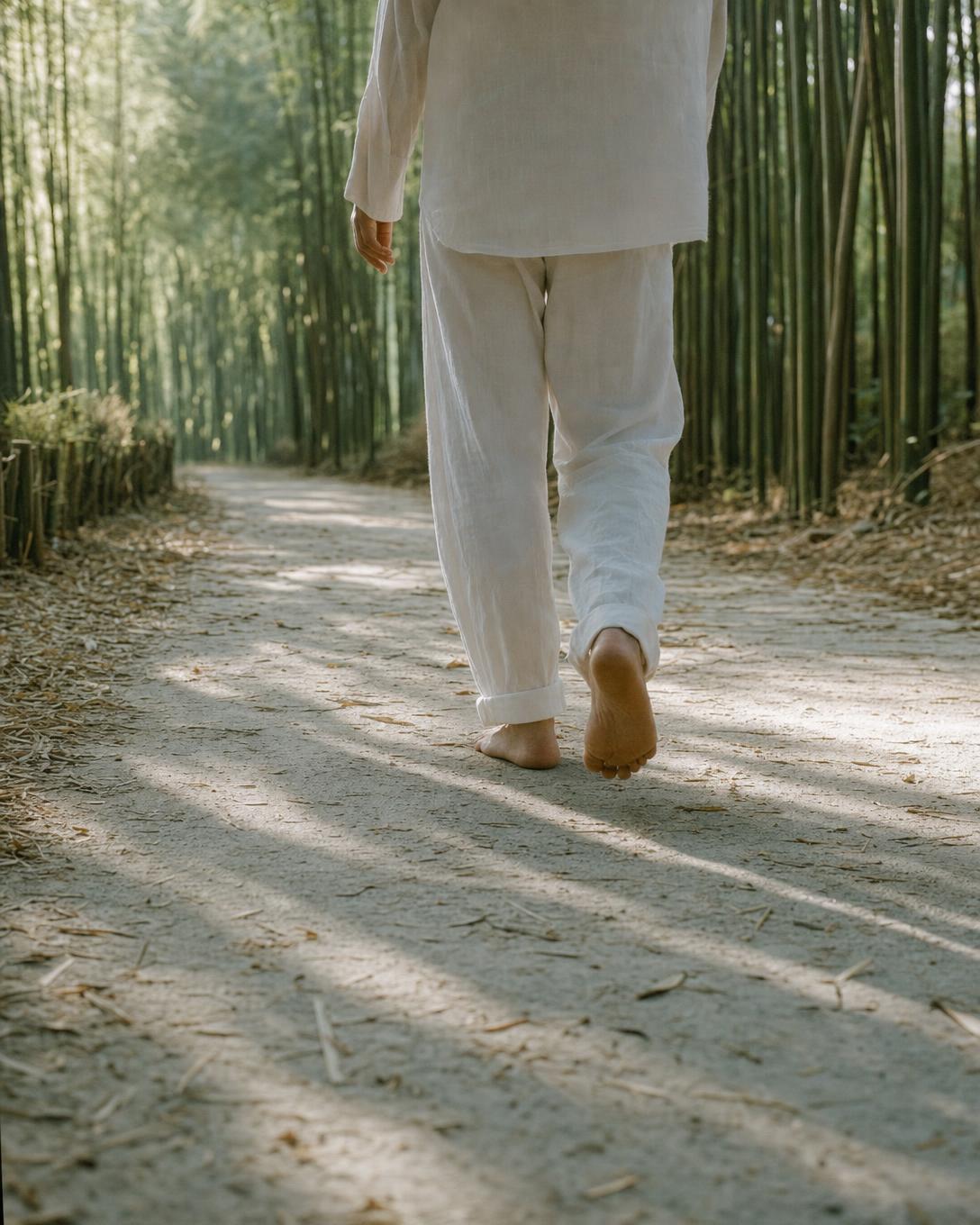
Walking meditation: how to do it, step by step
Walking meditation step by step: the path, pace, eyes and hands, noting each step in one to six parts, turning, and the five benefits the Buddha named.
Walking meditation is the practice of knowing the body as it walks: each lift, movement and placing of the foot, slowly and with full attention, up and down a short path. It is as old as sitting. The suttas describe monks practising walking and sitting by day and in the first and last watches of the night, and many vipassana teachers ask students to walk before every sitting. This page explains how to do walking meditation step by step: choosing a path, the pace, where to put the eyes and hands, noting each step in one to six parts, turning, how long to walk, how to combine it with sitting, and the five benefits the Buddha named.
What walking meditation is
The Pali word is caṅkama, 'walking up and down', which is where the Thai word jongkrom comes from. In the suttas the same word also names the stretch of ground used for it. Walking is one of the four postures (walking, standing, sitting and lying down) in which the Satipaṭṭhāna Sutta asks a meditator to know the body, and in the Mahāassapura Sutta the Buddha tells monks to purify the mind of obstructions by walking and sitting, by day and in the first and last watches of the night. Walking meditation is not exercise, and you are not walking to get anywhere. You walk in order to know walking.
Choosing a path
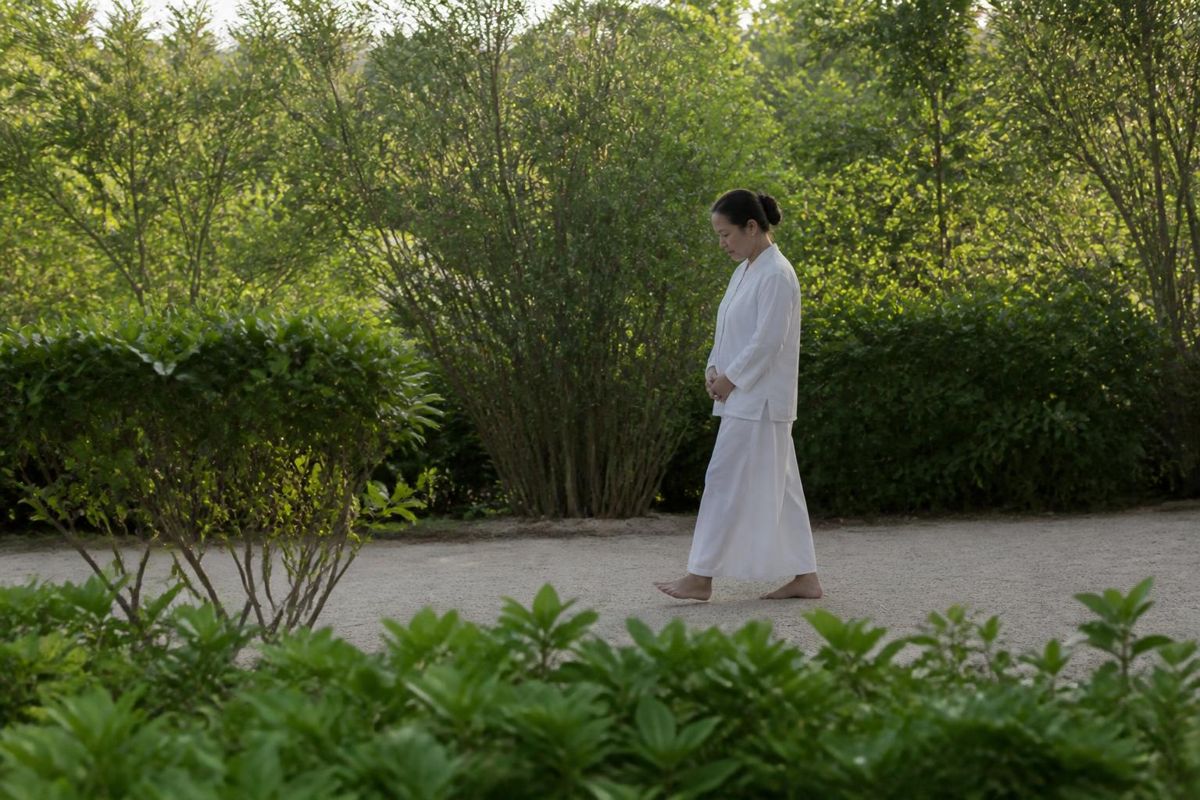
You need a straight, level stretch of five to ten steps, roughly four to seven metres. A hallway, a quiet room, a veranda or a garden path will do. A short path is better than a long one: the turns come often enough to keep you awake, and the mind has no destination to run ahead to. Walk barefoot or in socks if you can, so the soles of the feet can be felt clearly. If you feel self-conscious, choose a place where nobody watches; walking meditation should feel ordinary, not like a performance.
Pace, eyes and hands
- Pace: slower than usual, slow enough to feel each part of the step, but not so slow that you lose balance. As you divide the step into more parts, the pace slows by itself. When drowsy or restless, walk a little faster for a while.
- Eyes: open, with the gaze resting on the path about two metres ahead. Do not look at your feet, and do not look around. Seeing the way ahead keeps you safe; the attention itself rests in the feet.
- Hands: join them loosely in front of the body, behind the back or across the chest, and keep them still. Swinging arms pull attention away from the feet.
- Body: upright and relaxed, as in sitting. Let the movement come from the legs, without stiffness in the shoulders or face.
Walking meditation steps: noting in one to six parts
In the noting tradition, walking meditation divides each step into more parts as mindfulness grows. Each part is known as it happens and named with a soft mental label. Beginners stay with the first stage for days or weeks; there is no prize for moving on quickly. One widely used scheme runs like this:
- One part: 'right step', 'left step', noting each step as a whole.
- Two parts: 'lifting', 'placing'.
- Three parts: 'lifting', 'moving', 'placing'.
- Four parts: 'heel up', 'lifting', 'moving', 'placing'.
- Five parts: 'heel up', 'lifting', 'moving', 'lowering', 'touching'.
- Six parts: 'heel up', 'lifting', 'moving', 'lowering', 'touching', 'pressing'.
The label follows the foot, not the other way round: note 'lifting' as the foot actually lifts, and know the lifting more than the word. As the foot comes down, know how the sensations change: lightness, heaviness, the hardness of the floor, the pressure. If labels get in the way, drop them and simply know each movement; the noting meditation page says more about how labels are used.
Standing, turning and starting again
At the end of the path, stop. Know the stopping, then know the standing for a moment: the weight in the feet, the body upright. Turn slowly, in two or three small steps, knowing each one as turning. Stand again briefly, then begin the next length. Many teachers also ask you to notice the wish to walk, stop or turn just before you do it, because seeing intention arise before movement is part of seeing how body and mind work together. Turning is part of walking meditation, not a break from it. If the mind wanders in the middle of the path, stop, know what took it away, and start again from the next step.
How long to do walking meditation
Start with ten to fifteen minutes. On a retreat, walking periods of thirty minutes to an hour alternate with sitting all day; at home, a common pattern is to walk for as long as you will sit, or a little less. Walk longer when you are drowsy, after a meal, or when the body is stiff from sitting. Like sitting, walking meditation works through regularity: a short walk every day does more than an occasional long one.
Combining walking meditation with sitting
Walking meditation before sitting wakes body and mind and carries a stream of mindfulness into the sitting. Walking after sitting lets stiff legs recover without losing the thread. In a full session you might walk for fifteen minutes and then sit for fifteen, without breaking awareness as you change from one posture to the other: know the standing still, the lowering of the body, the folding of the legs and the placing of the hands. For posture, see meditation posture; for a whole home routine that alternates the two, see how to do vipassana at home. Sleepiness while sitting is one of the five hindrances, and getting up to walk is one of the oldest remedies.
The five benefits of walking meditation (AN 5.29)
A short discourse in the Numbered Discourses lists five benefits of walking up and down. Here it is in Pali, with our translation.
Pañcime, bhikkhave, caṅkame ānisaṁsā.
Katame pañca?
Addhānakkhamo hoti, padhānakkhamo hoti, appābādho hoti,
asitaṁ pītaṁ khāyitaṁ sāyitaṁ sammā pariṇāmaṁ gacchati,
caṅkamādhigato samādhi ciraṭṭhitiko hoti.
Ime kho, bhikkhave, pañca caṅkame ānisaṁsā.Mendicants, there are these five benefits of walking meditation. What five? One can bear long journeys; one can bear striving; one has little illness; what is eaten, drunk, chewed and tasted is properly digested; and the concentration gained while walking lasts long. These, mendicants, are the five benefits of walking meditation.
AN 5.29
- Fit for long journeys (addhānakkhama): monks of the time travelled on foot, and walking practice kept them able to.
- Fit for striving (padhānakkhama): the body stays strong enough for the long effort of meditation.
- Little illness (appābādha): the text's own word, describing a body that is used, not a promise of health.
- Good digestion: food and drink settle well, which is why walking after a meal is a long-standing habit.
- Lasting concentration: concentration gained while walking holds up better when you move, because it was built in movement.
Read these as the sutta's plain description of a walker's life, not as medical claims. The fifth matters most for practice: steadiness built while moving carries over into daily life, where we are rarely still.
Common difficulties
- Losing balance: you are walking too slowly for now, or the stance is too narrow. Walk a little faster with the feet slightly apart.
- Looking around: the eyes follow sounds and movement. Lower the gaze again and come back to the feet.
- Mechanical labels: the words run on while attention is elsewhere. Slow down, or drop the labels and feel the soles of the feet.
- Impatience: wanting to reach the end of the path. Each step is the whole practice; there is nowhere to get to.
- Self-consciousness: feeling silly walking so slowly. Practise where nobody sees you until it feels natural.
Walking mindfully in daily life
Once you know the feel of mindful walking, you can bring a little of it anywhere: the first ten steps out of bed, the walk to the bus, the stairs at work. Walk at a normal pace and simply know the feet touching the ground. This is not formal walking meditation, but it links your sessions to the rest of the day. For the teaching behind it, see the four foundations of mindfulness. If you have a history of serious mental illness, talk to a doctor and an experienced teacher before intensive practice.
Based on: Caṅkama Sutta (AN 5.29) · Satipaṭṭhāna Sutta (MN 10) · Mahāassapura Sutta (MN 39)
Read next
Meditation posture: how to sit for meditation
Meditation posture made simple: four ways to sit, how to place the back, hands, eyes and chin, what to do about pain, and your first session.
Noting meditation: rising and falling, step by step
Noting meditation with the rising and falling of the abdomen: how to note, what labels to use, walking with noting, and common mistakes.
How to do vipassana at home: a step-by-step guide
How to do vipassana at home, step by step: preparing, walking, sitting and noting, and a simple plan for your first week.