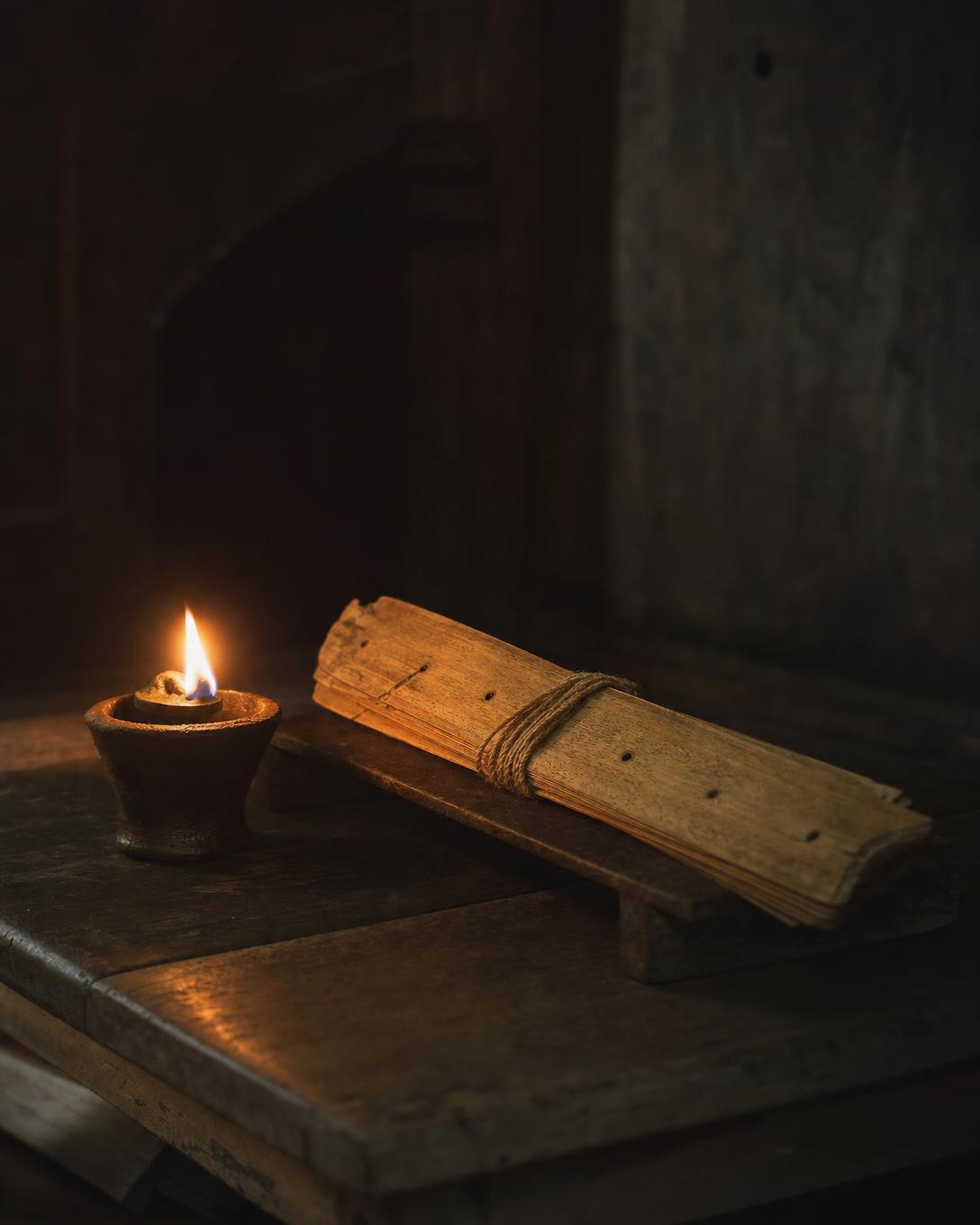
Objects of insight: the six groups of teaching that vipassana looks at, from the five aggregates to dependent origination
Objects of insight are the things vipassana looks at, and Theravada teaching gathers them into six groups called the vipassanābhūmi, the grounds of insight. Bhūmi means ground or soil: these are the soil in which wisdom grows. The six are the five aggregates, the twelve sense bases, the eighteen elements, the twenty-two faculties, the four noble truths and the twelve links of dependent origination. They are not six separate things. All six describe the same thing, our own body and mind, divided up from different angles.
The short answer to the common exam question is this: the object of vipassana meditation is nāma-rūpa, mind and matter, which is the same as the five aggregates as they actually occur now. It is not an image or idea that the mind builds up, such as a kasiṇa disc. 'Object' here (ārammaṇa) does not mean a mood, as it often does in everyday Thai, but whatever the mind is knowing. Below, each group is given in full as the Vibhaṅga lists it, followed by what it means to take these groups as the object of practice.
Where the six grounds of insight come from
All six lists are set out in the Vibhaṅga, the second book of the Abhidhamma Piṭaka. Its chapters typically open with a short list, such as pañcakkhandhā, 'five aggregates', and then explain every item. Later, Buddhaghosa took up the same groups at the start of the Visuddhimagga's part on wisdom (chapters 14 to 17). He compares them to soil: these states are the ground of wisdom, the purity of conduct and the purity of mind are its roots, and the remaining five stages of the seven purifications are its trunk. So a meditator first gets to know the ground by learning and asking questions, and then looks for these objects of insight in their own body and mind. Thai teaching calls the six together vipassanabhumi.
1. The five aggregates (khandha)
Khandha means a heap or a group. Life is divided into five heaps: the first is matter, the other four are mind. Each is explained on the page on the five aggregates.
- Form (rūpakkhandha): the body and matter, the four great elements and the form that depends on them.
- Feeling (vedanākkhandha): pleasant, painful or neither.
- Perception (saññākkhandha): recognising, such as 'this is red' or 'that is a voice I know'.
- Formations (saṅkhārakkhandha): the mind's activities, such as intention, anger, kindness and effort.
- Consciousness (viññāṇakkhandha): knowing through the eye, ear, nose, tongue, body and mind.
The Vibhaṅga explains that the form aggregate is all form, past, future or present, inside or outside, coarse or fine, low or refined, far or near, gathered together into one heap. The other four are explained the same way. This matters for practice: the meditator does not look at body and mind as 'mine', but as heaps of events that arise and pass away with their causes.
2. The twelve sense bases (āyatana)
Āyatana means a base or a source, the place where experience happens. There are six inner bases, the doors of knowing, and six outer bases, what is known. The Vibhaṅga lists them in pairs:
- Eye base (cakkhāyatana) with the base of sights (rūpāyatana)
- Ear base (sotāyatana) with sounds (saddāyatana)
- Nose base (ghānāyatana) with smells (gandhāyatana)
- Tongue base (jivhāyatana) with tastes (rasāyatana)
- Body base (kāyāyatana) with touches (phoṭṭhabbāyatana): cold, heat, softness, hardness
- Mind base (manāyatana) with mind-objects (dhammāyatana): what only the mind knows, such as feelings, perceptions and mental formations
Right after this list, the Vibhaṅga runs every base through the same words, quoted below. It makes plain that knowing the sense bases, for insight, is not reciting their names but seeing that the eye and what it sees are impermanent.
Cakkhuṁ aniccaṁ dukkhaṁ anattā vipariṇāmadhammaṁ.
Rūpā aniccā dukkhā anattā vipariṇāmadhammā.The eye is impermanent, suffering, not-self, liable to change. Sights are impermanent, suffering, not-self, liable to change.
Vb 2
3. The eighteen elements (dhātu)
Dhātu means an element: something that bears its own nature, with no maker and no owner. The eighteen elements divide the sense bases more finely by giving consciousness, the knowing, a place of its own. So there are six sets of three: the door, what it knows, and the knowing through that door.
- Eye element, sight element, eye-consciousness element (cakkhudhātu, rūpadhātu, cakkhuviññāṇadhātu)
- Ear, sound and ear-consciousness elements
- Nose, smell and nose-consciousness elements
- Tongue, taste and tongue-consciousness elements
- Body, touch and body-consciousness elements
- Mind element, mind-object element and mind-consciousness element (manodhātu, dhammadhātu, manoviññāṇadhātu)
The point of dividing it this way is to see that one moment of seeing is three things meeting: the eye, what is seen, and the consciousness that knows it. No one stands behind them doing the seeing. Seen often, this loosens the sense that a self is always there receiving experience. The Vibhaṅga's chapter on the elements also gives another set of six (earth, water, fire, air, space and consciousness), but the grounds of insight use the set of eighteen.
4. The twenty-two faculties (indriya)
Indriya means a faculty, something that governs its own job: the eye governs seeing, faith governs trust. The Vibhaṅga lists twenty-two, which can be grouped to make them easier to remember:
- Six sense faculties: eye, ear, nose, tongue, body and mind (cakkhundriya to manindriya).
- Three of sex and life: femininity, masculinity, and the life faculty that sustains body and mind (itthindriya, purisindriya, jīvitindriya).
- Five of feeling: bodily pleasure, bodily pain, mental joy, mental distress and neutral feeling (sukhindriya to upekkhindriya).
- Five spiritual faculties: faith, energy, mindfulness, immersion and wisdom (saddhindriya to paññindriya).
- Three supramundane faculties: 'I shall know the unknown' (anaññātaññassāmītindriya, at the path of stream-entry), final knowledge (aññindriya, in the stages between) and the faculty of one who has fully known (aññātāvindriya, the arahant).
In practice the five spiritual faculties are the ones a meditator meets most, because they need balancing: faith with wisdom, energy with immersion, and mindfulness watching over all of them. The last three, though they are on the list, are not objects of insight to observe; they arise by themselves at the moments of the path and its fruit.
5. The four noble truths (ariyasacca)
- The noble truth of suffering (dukkhaṁ ariyasaccaṁ)
- The noble truth of the origin of suffering, which is craving
- The noble truth of the cessation of suffering
- The noble truth of the practice that leads to the cessation of suffering, the eightfold path
The Vibhaṅga explains suffering as birth, ageing, death, sorrow, meeting what you dislike, parting from what you love and not getting what you want, and then sums it up in one sentence, quoted below. That sentence ties the fifth ground back to the first. What the meditator watches moment by moment, the five aggregates, is the truth of suffering itself. More on the four noble truths.
Saṅkhittena pañcupādānakkhandhā dukkhā.
In brief, the five aggregates of grasping are suffering.
Vb 4
6. The twelve links of dependent origination
Dependent origination is the way things arise in dependence on one another, a chain of twelve conditions. The Vibhaṅga opens this chapter with the same chain found in the discourses, for example SN 12.1.
- Ignorance (avijjā) of the four truths
- Volitional formations (saṅkhārā)
- Consciousness (viññāṇa)
- Name and form (nāmarūpa)
- The six sense bases (saḷāyatana)
- Contact (phassa)
- Feeling (vedanā)
- Craving (taṇhā)
- Grasping (upādāna)
- Continued existence (bhava)
- Birth (jāti)
- Ageing and death (jarāmaraṇa), with sorrow, lamentation, pain, distress and despair
When one link is there, the next comes to be; when ignorance fades away completely, the whole chain ceases. In practice the part easiest to see is contact, feeling, craving: you hear a sound you dislike, an unpleasant feeling comes, and then the wish for the sound to go away. Seeing that moment as it happens keeps the mind from being carried further. See dependent origination for the full explanation.
What the objects of insight are in practice
The six lists can look daunting, but when you actually sit or walk you do not go through them item by item. In practice the objects of insight are the mind and matter that show up right now. Matter, such as hardness, heat, or the movement of the abdomen as you breathe. Mind, such as a feeling of pain, a thought, anger, or the knowing of these things. These are realities (paramattha) with their own character, and you can see them arise and pass.
What the meditator wants to see in this mind and matter are the three characteristics: impermanence, suffering in the sense of not being able to stay as it is, and not-self. The three characteristics are what wisdom sees in mind and matter; they are not one more object set up to look at separately. How to know mind and matter moment by moment is explained under vipassana meditation.
Which of these are objects of insight?
This question often comes up in Buddhism exams. The rule for answering it: if it is mind or matter that really occurs and can be seen to arise and pass, it is among the objects of insight; if it is something the mind agrees to call by a name or builds into an image, it is an object of calm. Some examples:
- The five aggregates, or mind and matter: these are the objects of insight directly.
- Knee pain happening now, a sound being heard, a thought popping up: objects for insight, because they are mind and matter that rise and fall.
- A kasiṇa, such as a disc of earth or a green disc: an object for calm (samatha). The mental image built from it is a concept.
- Repeating 'Buddho', or a recalled image of the Buddha: objects for calm.
- The breath: it can go either way. Held as a concept or a sign, it serves calm; watched as actual touch, movement and change, it serves insight.
- Nibbāna: not among the objects of insight, even though it sits in the lists (within the mind-object base and as the third truth), because it does not arise or pass away. It is realised when the path arises.
So if a test asks you to choose between the five aggregates (or mind and matter) and a kasiṇa, a foul object or a recollection, the answer is the five aggregates. The difference between the objects of calm and insight is set out in samatha vs vipassana, and the full list on the calm side is in the 40 meditation subjects.
Using the grounds of insight day to day
Knowing the grounds of insight helps in three ways. It tells you what to look at, so you do not chase lights, colours or visions. It gives you words for what you see: the ache is a feeling, the thought is a formation or consciousness, not 'me'. And it shows that the six groups point to the same truth: whether you look in terms of aggregates, bases or elements, you find only things that arise and cease, with no owner.
A simple way: while sitting, when something becomes clear, know it as matter or mind, notice that it is changing, and return to your main object. Do not stop to work out which list it belongs to. Sorting belongs to study; while practising there is one job, knowing things as they are. Some people learn or chant the vipassanabhumi patha so the six headings stay in mind. As mind and matter become clearer, the later kinds of knowledge follow in order; see the stages of insight.
Based on: Vibhaṅga, Analysis of the Aggregates (Vb 1) · Vibhaṅga, Analysis of the Sense Bases (Vb 2) · Vibhaṅga, Analysis of the Elements (Vb 3) · Vibhaṅga, Analysis of the Truths (Vb 4) · Vibhaṅga, Analysis of the Faculties (Vb 5) · Vibhaṅga, Analysis of Dependent Origination (Vb 6) · Visuddhimagga, by Buddhaghosa
Read next

What are the five aggregates? Form, feeling, perception, choices, consciousness
The five aggregates are the five groups that make up body and mind, explained simply one by one, with everyday examples and the teaching of the suttas

Dependent Origination: The 12 Links, With the Pali Chant
Dependent origination, the twelve links by which suffering arises and ceases, explained one by one, with the Pali chant forward and in reverse

Vipassanabhumi Patha: the Chant of the Six Grounds
The vipassanabhumi patha: a Pali chant that runs through the six grounds of insight, from the five aggregates to dependent origination, with its meaning