
The five aggregates are the five groups that make up body and mind, explained simply one by one, with everyday examples and the teaching of the suttas
The five aggregates are the five groups that make up a life: form, feeling, perception, choices and consciousness. The word translates the Pali khandha, which means a heap, a group or a part. The Buddha divided what we call 'me' into these five groups to show that, looked at closely, body and mind contain only five kinds of things that arise and pass away according to their causes, and that none of them is a lasting self. This page explains what the five aggregates are, how the Navakovada defines them, what each one means in simple terms, examples from everyday life, the similes in the suttas, and how to use this knowledge in insight meditation.
What are the five aggregates?
'Aggregate' here does not mean five organs. It means five heaps or categories of experience. The texts explain that any form at all, whether past, future or present, internal or external, coarse or fine, inferior or refined, far or near, taken all together, is called the form aggregate, the heap of form. Feeling, perception, choices and consciousness are counted the same way. So the five aggregates are like five boxes that hold everything we can experience: a sound heard yesterday and the ache in your knee right now each belong in one box or another. The Vibhaṅga of the Abhidhamma opens its analysis of the aggregates with a short list:
Pañcakkhandhā—
rūpakkhandho, vedanākkhandho, saññākkhandho, saṅkhārakkhandho, viññāṇakkhandho.There are five aggregates: the aggregate of form, of feeling, of perception, of choices and of consciousness.
Vb 1
In the suttas the Buddha usually speaks of the five grasping aggregates (upādānakkhandha): the five as they are held onto with craving and the sense of 'mine'. In his first sermon, after listing birth, ageing, illness, death and separation, he sums up all suffering in a single phrase:
saṅkhittena pañcupādānakkhandhā dukkhā.
In brief, the five grasping aggregates are suffering.
SN 56.11
The phrase says that the problem is not having a body and a mind, but holding the aggregates as 'me' and 'mine'. That holding is grasping, and it is what turns the ordinary changes of body and mind into mental suffering.
What are the five aggregates? The Navakovada's wording
The Navakovada, the standard first-level Dhamma textbook, defines the five aggregates in the section of fives of its list of teachings. Below is the Navakovada's wording, quoted as written, in our English translation:
- This body and mind are divided into five groups, called the five aggregates: 1. form, 2. feeling, 3. perception, 4. choices, 5. consciousness.
- The four elements, earth, water, fire and wind, coming together as this body, are called form.
- Feeling an object as pleasant, that is, at ease in body and mind; or as painful, that is, ill at ease in body and mind; or as neutral, neither painful nor pleasant, is called feeling.
- Recognising, that is, being able to recognise sights, sounds, smells, tastes, touches and objects that arise in the mind, is called perception.
- Mental factors, that is, states arising with the mind, whether good, called wholesome, bad, called unwholesome, or in between, neither good nor bad, called indeterminate, are called choices.
- Knowing an object at the moment a sight strikes the eye, and so on, is called consciousness.
- In short, these five aggregates are called name and form: feeling, perception, choices and consciousness together are name; form remains form.
The Navakovada starts from the simplest picture, our own body and mind, and divides it into five groups. Its last line matters a great deal, because it shortens the five aggregates to two: form, the bodily side, and name, the four mental aggregates. This pair, name and form (nāmarūpa), is what a meditator actually watches in insight practice. Note also that the word for 'object' here, ārammaṇa (Thai อารมณ์), means in Dhamma language whatever the mind is aware of, such as a sight, a sound or a thought, not a good or bad mood as in everyday Thai.
The five aggregates explained simply, one by one
- Form (rūpa) is the material side: our body and the physical things around us. The Abhidhamma divides it into the four great elements, qualities we can actually feel: earth is hardness and softness, water is cohesion and flowing, fire is heat and cold, and wind is movement and pressure; and the form that depends on these four, such as the eye, the ear, colours and sounds. When you sit and feel the hardness of the floor, the warmth of your hands or the rising and falling of the belly, what you feel is form.
- Feeling (vedanā) is the tone of an experience: pleasant, painful or neutral. It is not a complex emotion such as love or anger, but the basic feeling that comes with every perception. It arises from contact through the eye, ear, nose, tongue, body and mind. A cool breeze on a hot day is a pleasant feeling, a road drill in the early morning is a painful one, and the hum of a fan you are not paying attention to is neutral. Feeling matters because it is the point where wanting and disliking usually follow at once.
- Perception (saññā) is recognising. Seeing red and knowing it as red, hearing a voice and knowing it is your mother's, seeing a face and recognising a friend: that is perception. Perception lets us get through life, but it can also be wrong: you see someone far away and take them for a person you know, then find as you come closer that you were mistaken. And memories fade with time. In everyday Thai, สัญญา means a promise or a contract, but among the five aggregates it means only recognising.
- Choices (saṅkhāra), also translated 'mental formations', are the states that shape the mind. The most important is intention (cetanā), the will that chooses and drives our actions; the group also includes greed, anger, kindness, mindfulness, effort and doubt, which the Navakovada calls mental factors. The Abhidhammattha-saṅgaha counts 52 mental factors; feeling and perception are aggregates of their own, and the other 50 make up the aggregate of choices. This aggregate is therefore where karma lives, for the Buddha said: 'It is intention that I call deeds' (AN 6.63).
- Consciousness (viññāṇa) is knowing an object through one of the six doors: seeing with the eye, hearing with the ear, smelling with the nose, tasting with the tongue, feeling touch with the body and knowing ideas with the mind. Eye-consciousness arises dependent on the eye and a sight; when the conditions end, that moment of consciousness ends. So consciousness among the five aggregates is not a ghost or a spirit, as the Thai word วิญญาณ means in everyday speech. In the Mahātaṇhāsaṅkhaya Sutta (MN 38) the Buddha corrects a monk who believed that the same consciousness travels on unchanged, and says that consciousness arises from conditions.
Examples of the five aggregates in everyday life
The five aggregates do not happen one stage at a time. They work together all the time. Try separating them out in three ordinary situations.
- The phone rings: the sound and the ear are form, hearing is consciousness, recognising your boss's ringtone is perception, the small unpleasant jolt is feeling, and the worry and the decision to answer are choices.
- Eating a ripe mango: the tongue and the flavour are form, tasting is consciousness, recognising the sweetness as mango is perception, the enjoyment is pleasant feeling, and wanting another slice is a choice.
- Knee pain while sitting in meditation: the knee and the tight, hot sensation are form, knowing the touch is consciousness, labelling it 'pain' and 'my knee is getting damaged' is perception, the hurt is painful feeling, and the urge to move, the irritation, or the decision to keep watching patiently are choices.
Once you can separate them like this, something that seems big, such as 'I am hurting' or 'I am angry', becomes a set of small parts that arise and pass. The sense of an 'I' who owns it all grows lighter. That is why meditation teachers often teach the five aggregates before insight practice begins. Notice too that in the third example choices can be good or bad: irritation is unwholesome and patience is wholesome, just as the Navakovada explains.
Five similes from the suttas: foam, a bubble, a mirage, a plantain and a magic trick
In the Pheṇapiṇḍūpama Sutta (SN 22.95) the Buddha compares the five aggregates to images that are easy to remember, and they explain the five aggregates better than any definition.
- Form is like a lump of foam carried down a river: it looks like a solid mass, but when examined there is nothing substantial in it.
- Feeling is like a bubble that forms on the water when it rains: it appears and bursts at once.
- Perception is like a mirage in the last month of the hot season: clearly seen, yet not really there as it appears.
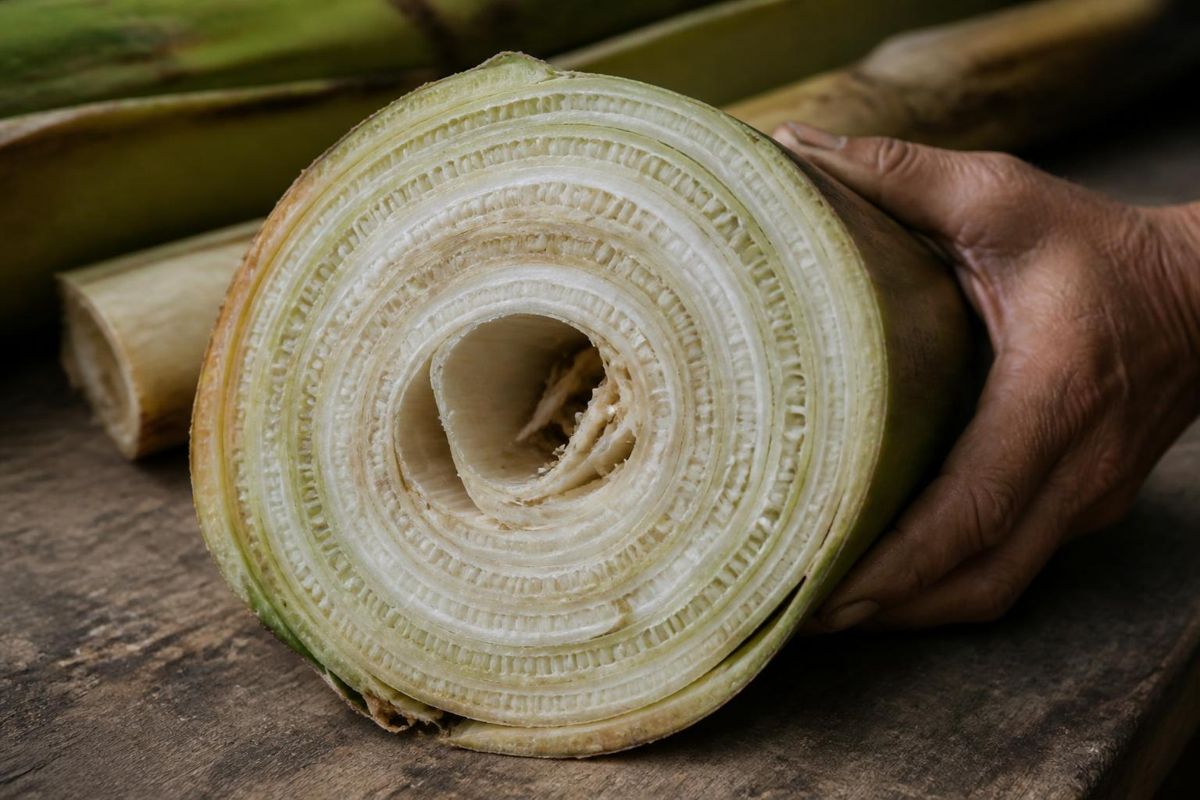
- Choices are like a plantain trunk: someone looking for heartwood peels away layer after layer and finds no core.
- Consciousness is like a magic trick performed at a crossroads: convincing to watch, but only an illusion.
The similes do not say that the aggregates do not exist; the foam is really there while it floats. They say that, when examined carefully, all five are empty of any core that could be held as a self.
None of the aggregates is a self
The Buddha did not teach the five aggregates so that we would memorise a list, but so that we would see that none of them is a self. In the Anattalakkhana Sutta (SN 22.59), by tradition his second sermon, he points out that if form were self, we could tell it: let it be like this, let it not be like that. But we cannot. The same is true of feeling, perception, choices and consciousness. Then he questions the five monks one aggregate at a time.
Taṁ kiṁ maññatha, bhikkhave,
rūpaṁ niccaṁ vā aniccaṁ vā”ti?
“Aniccaṁ, bhante”.
“Yaṁ panāniccaṁ dukkhaṁ vā taṁ sukhaṁ vā”ti?
“Dukkhaṁ, bhante”.
“Yaṁ panāniccaṁ dukkhaṁ vipariṇāmadhammaṁ, kallaṁ nu taṁ samanupassituṁ:
‘etaṁ mama, esohamasmi, eso me attā’”ti?
“No hetaṁ, bhante”.What do you think, mendicants? Is form permanent or impermanent? Impermanent, sir. And is what is impermanent suffering or happiness? Suffering, sir. And is it fitting to regard what is impermanent, suffering and bound to change in this way: this is mine, I am this, this is my self? No, sir.
SN 22.59
The monks' answers do not come from belief but from their own seeing: what keeps changing and cannot be controlled is not fit to be held as 'me' or 'mine'. Seeing this of every aggregate, clinging loosens. The sutta ends by saying that while they listened, the minds of the five monks were freed from the defilements by not grasping. Impermanence, suffering and not-self are the three marks of existence, the characteristics of all five aggregates, explained further on the anatta page.
Contemplating the five aggregates in insight meditation
In the Satipatthana Sutta (MN 10), watching the five aggregates belongs to the contemplation of phenomena. The meditator does not sit and think about the aggregates, but sees them as they appear, together with their arising and their passing, as the sutta says:
iti rūpaṁ, iti rūpassa samudayo, iti rūpassa atthaṅgamo;
iti vedanā, iti vedanāya samudayo, iti vedanāya atthaṅgamo;
iti saññā, iti saññāya samudayo, iti saññāya atthaṅgamo;
iti saṅkhārā, iti saṅkhārānaṁ samudayo, iti saṅkhārānaṁ atthaṅgamo;
iti viññāṇaṁ, iti viññāṇassa samudayo, iti viññāṇassa atthaṅgamo.Such is form, such is the arising of form, such is the passing of form. Such is feeling, such is its arising, such is its passing. Such is perception, such is its arising, such is its passing. Such are choices, such is their arising, such is their passing. Such is consciousness, such is its arising, such is its passing.
MN 10
In practice, start with what is clearest, such as the rising and falling of the belly or the touch of the feet while walking, which is form. When a feeling is clear, pain or ease, know the feeling. When a thought or anger arises, know it as a choice. You do not need to name the aggregate every time. What matters is seeing that each thing arises by itself, changes and passes away. How to begin is explained on the vipassana at home page, and the five aggregates are also the first of the grounds of insight, the objects used to develop wisdom.
Do not use the list to measure your progress. Being able to recite the five aggregates is not the same as seeing them, and a moment of seeing that pain is not 'me' is not yet complete letting go. Keep looking, a little every day, and understanding deepens by itself.
Common misunderstandings
- The aggregates are not stages in time: all five arise together in every moment of experience. The order of the list is only a way of teaching, from the coarse to the subtle.
- Choices are not the body: in everyday Thai, สังขาร often means the ageing body, but among the five aggregates it means intention and the states that shape the mind. In the Buddha's last words, 'all conditioned things are subject to decay' (DN 16), the same Pali word means everything conditioned, including all five aggregates.
- Not-self does not mean nothing exists: the aggregates exist and function, and actions still have results. The teaching denies only a lasting self that owns the aggregates; it does not deny responsibility for what we do.
- The aggregates are not bad in themselves: the Buddha and the arahants still had the five aggregates until the end of their lives. What ends is the clinging, not body and mind. That clinging arises in a chain described by dependent origination.
Summary: what the five aggregates are made of
- Form (rūpa): the body and matter, the elements of earth, water, fire and wind; the material side.
- Feeling (vedanā): pleasant, painful or neutral; the mental side.
- Perception (saññā): recognising; the mental side.
- Choices (saṅkhāra): intention and the states that shape the mind, good, bad or neutral; the mental side.
- Consciousness (viññāṇa): knowing through the eye, ear, nose, tongue, body and mind; the mental side.
The five aggregates are made of one group of form and four groups of mind. All of them are impermanent, cannot stay as they are, and are not self. Knowing the five aggregates is therefore both a basic piece of Buddhist teaching and a doorway to seeing things as they are in meditation.
Based on: Navakovada (public domain) · Vibhaṅga, Analysis of the Aggregates (Vb 1) · Dhammacakkappavattana Sutta (SN 56.11) · Anattalakkhaṇa Sutta (SN 22.59) · Satipaṭṭhāna Sutta (MN 10) · Pheṇapiṇḍūpama Sutta (SN 22.95) · Mahātaṇhāsaṅkhaya Sutta (MN 38) · Nibbedhika Sutta (AN 6.63) · Mahāparinibbāna Sutta (DN 16) · Abhidhammattha-saṅgaha, by Anuruddha
Read next
The Characteristic of Not-Self
The second sermon, on not-self

The Three Marks of Existence: Anicca, Dukkha and Anatta
The three marks of existence, impermanence, unsatisfactoriness and not-self, explained with their sources in the suttas and everyday examples

Objects of Insight: the Six Grounds of Vipassana
Objects of insight: the six groups of teaching that vipassana looks at, from the five aggregates to dependent origination