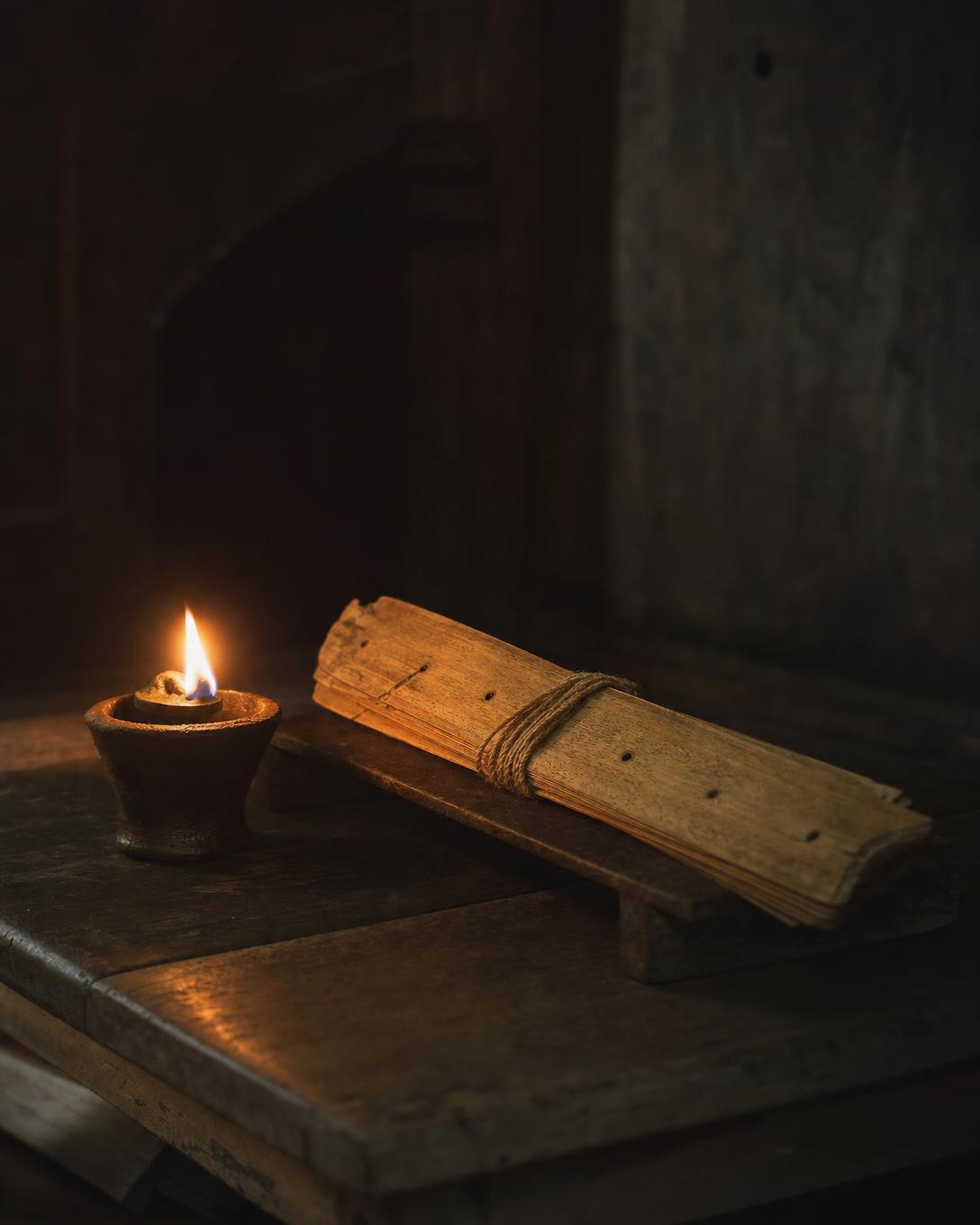
The paṁsukūla verses for the dead and for the living, on the impermanence of life, with meanings
For the dead
Aniccā vata saṅkhārā, uppādavayadhammino;
Uppajjitvā nirujjhanti, tesaṁ vūpasamo sukho.
Meaning
Alas, conditioned things are impermanent; their nature is to rise and fall. Having arisen, they cease. Their stilling is bliss. (Sakka, lord of the gods, spoke this verse as the Buddha passed into final Nibbāna.)
For the living
Aciraṁ vatayaṁ kāyo, pathaviṁ adhisessati;
Chuddho apetaviññāṇo, niratthaṁva kaliṅgaraṁ.
Meaning
Before long, alas, this body will lie on the ground, cast aside, without consciousness, like a useless log. (Dhammapada, verse 41)
Machine translation from: Mahāparinibbāna Sutta (DN 16), Pali text, SuttaCentral · Dhammapada, chapter on the mind (Dhp 41), Pali text, SuttaCentral
Read next
The Abhidhamma Chant: the Seven Books
The Abhidhamma chant heard at funerals: the opening passage of each of the seven Abhidhamma books, in Pali with a new translation

Kruat Nam: the merit-dedication chant, short and full, with translation and how to pour the water
The kruat nam chant, short and full, in Pali with reading and translation, how to pour the water after giving alms or while monks chant, and dedicating merit to the departed

The Three Marks of Existence: Anicca, Dukkha and Anatta
The three marks of existence, impermanence, unsatisfactoriness and not-self, explained with their sources in the suttas and everyday examples